








Got a question? We're happy to help
03303903059
Noticed some cold patches at the top of your radiators? Don't worry, your system likely just needs bleeding. It sounds technical, but it’s actually one of the quickest and easiest DIY jobs you can do.
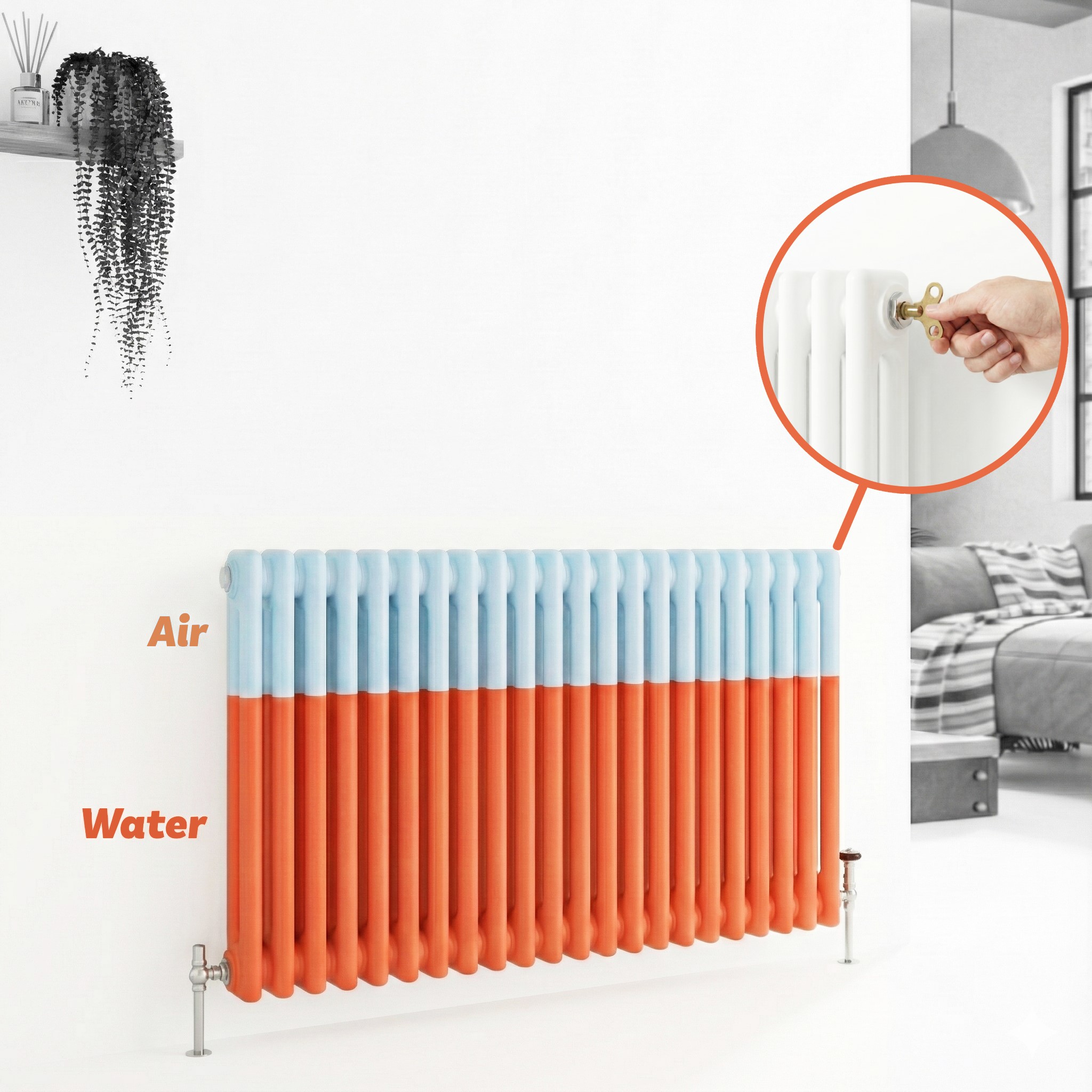
Trapped air stops hot water from filling the whole radiator, making your heating work harder than it needs to. By releasing that air, you'll get your home nice and toasty again in no time.
Follow our simple step-by-step guide below to get your heating back to its best.
Safety First
Never bleed your radiators when they're hot. You risk releasing scalding water or steam. Always make sure the system is off and cool.
You will need:
 Radiator bleed key (or flat-head screwdriver)
Turn off your central heating completely and give the radiators plenty of time to cool down. If you live in a house with an upstairs, it’s best to start with the downstairs radiators first, beginning with the one furthest away from your boiler.
Locate the bleed valve at the top corner of the radiator. It looks like a round hole with a square shaft inside. Pop your radiator key (or screwdriver) into the slot.
Hold your cloth underneath the valve to catch any splashes, then gently turn the key anti-clockwise. You only need a quarter to a half-turn—there’s no need to unscrew it completely!
As soon as you open the valve, you’ll hear a hissing sound. That’s the trapped air escaping. Keep the valve open until the hissing stops and water begins to trickle out.
The moment you see water, close the valve by turning the key clockwise. Don't over-tighten it, just make sure it's shut firmly.
Repeat this process for your other radiators, moving from downstairs to upstairs. Once you're done, check your boiler pressure gauge. Releasing air can lower the pressure, so you might need to top it up using the filling loop (check your boiler manual if you aren't sure how).
Turn your heating back on and enjoy the warmth! If you find yourself bleeding radiators constantly, it might be worth calling a heating engineer to check for underlying issues.
When it comes to bleeding your radiators, always make sure your heating is off and cooled down.
If you live in a house with multiple floors, start on the ground floor. Begin with the radiator furthest from the boiler and work your way back through your rooms until you reach the radiator that’s closest.
Once the ground floor is complete, move upstairs and repeat the process—again starting with the radiator furthest away from the boiler and finishing with the closest.
After you’ve bled all the radiators, remember to repressurise your boiler.
Think of it like “herding” the unwanted air through the system.
If you bleed the upstairs radiators first, trapped air bubbles may eventually rise up and get stuck in the radiators you just cleared.
You’ll know it’s done when the hissing sound stops and a steady trickle of water starts to come out, this is when you should close the valve.
After that, turn the heating back on, wait 15 minutes and feel the tops of your radiators - if they’re the same temperature as the bottom it’s sorted.
You should stop bleeding your radiators once water has begun to steadily trickle out, if you’ve bled a radiator too much you’ll simply just have to top the system up a little more at the boiler (usually to ‘1.’ bar on the gauge).
Bleeding radiators with the heating on is a bad idea. Water in your radiators can be 60-80c, and if the pump is running, it may force hot water to spray out the moment you turn your radiator key, instead of dribbling out. In the worst case, you could end up with hot, black sludge-water hitting your face because of the pump pressure, and potentially ruining your day (or even Christmas for yourself and your family).
There’s also another issue - if you open a bleed valve on a radiator where the pump is pulling water, you might even draw air in. That means you’ll then have to start the whole process all over again.