








Got a question? We're happy to help
03303903059Choosing the right way to heat your home is a big decision that impacts your comfort and your energy bills. While central heating is the standard for whole-house warmth, electric models offer precise control and lower installation costs. This friendly guide breaks down the pros and cons of each option to help you make the best, most efficient choice for your property.
Let's get you sorted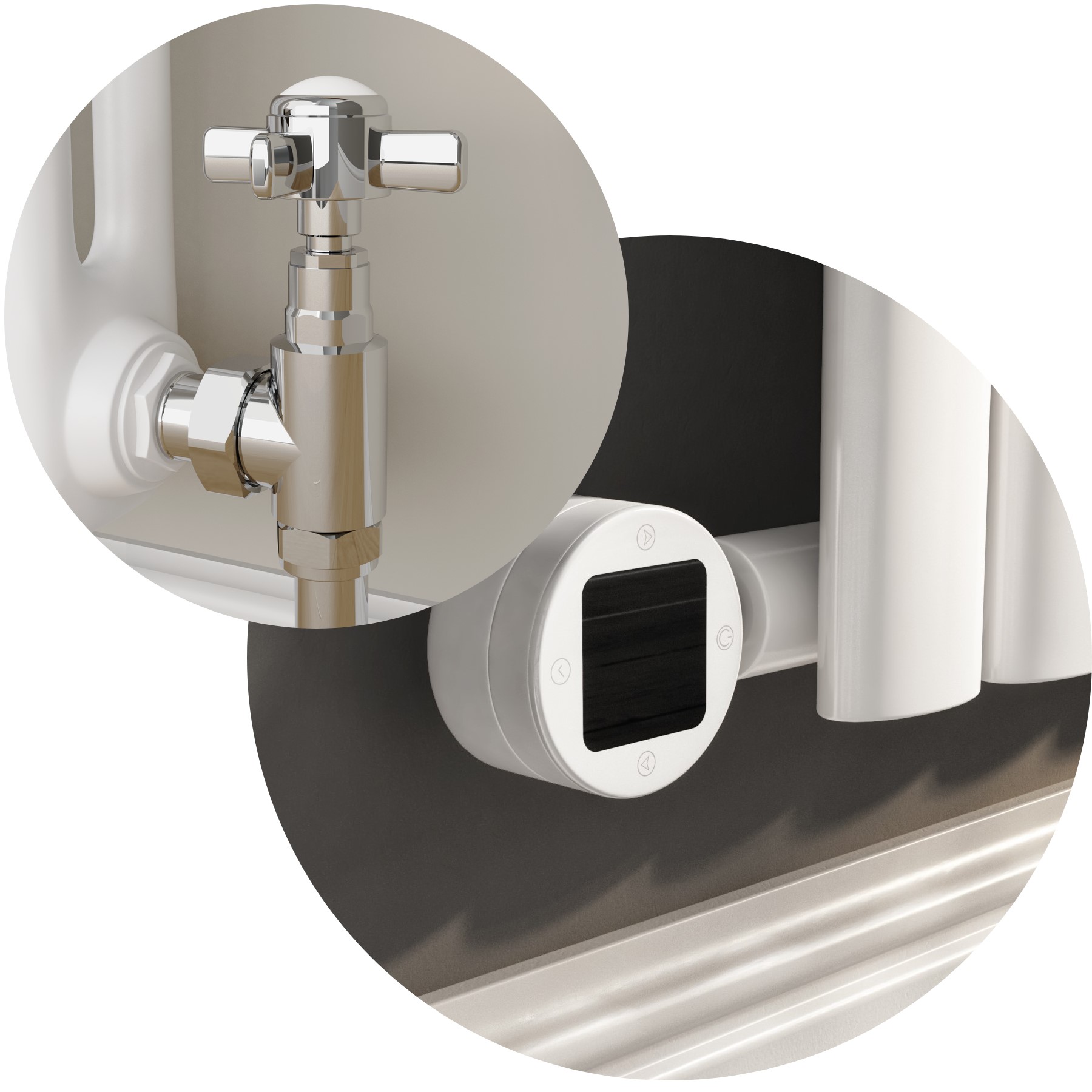
 Central Heating
|
 Electric
|
|
|---|---|---|
| Installation | Potential higher installation costs unless you're a DIYer. Boiler or heat pump required. Requires pipes, vents, and ducts. | Low Installation Costs - Easy to install, simply plug into a wall socket or hard-wire to a spur. |
| Running Cost & Control | Cost effective and cheaper to run in the long-term with gas prices often lower than electricity. Heat the whole house efficiently. | Built-in thermostat for precise temperature control in individual rooms. Save money by heating single rooms and not the whole house. |
| Efficiency | Gas boilers are often less efficient than electric radiators, but gas is much cheaper. Radiators are compatible with heat pumps for future proofing your home. | Convert almost all of the energy they use into heat. Potential for higher energy bills if not used efficiently, this can be avoided by creating different heating zones throughout the property. |
| Maintenance | Central heating systems require servicing and repairs. You'll need to bleed your radiators occasionally, which is a piece of cake if you follow our guide. | Very little maintenance aside from the occasional dusting or wipe down. |
The final choice between central heating and electric radiators depends entirely on your home's setup and your heating needs. If you are heating a whole house, or planning a new build where pipes can be easily installed, central heating offers lower long-term running costs and whole-home consistency. If you need supplemental heat for a single room, a home office, or a property where installing pipes is too disruptive, electric radiators provide superior efficiency, low installation cost, and zoned control.