








Got a question? We're happy to help
03303903059
A zoned heating system moves away from the old fashioned "one thermostat fits all" approach and allows you to set different temperatures in different rooms based on your schedule.
You can program the kitchen to be warm for breakfast, but let the bedrooms cool down once everyone has left for the day. If you don't use your living room until after your evening meal, have it heat up for your arrival at 7pm.
This guide explains exactly how to do it.
The Golden Rule
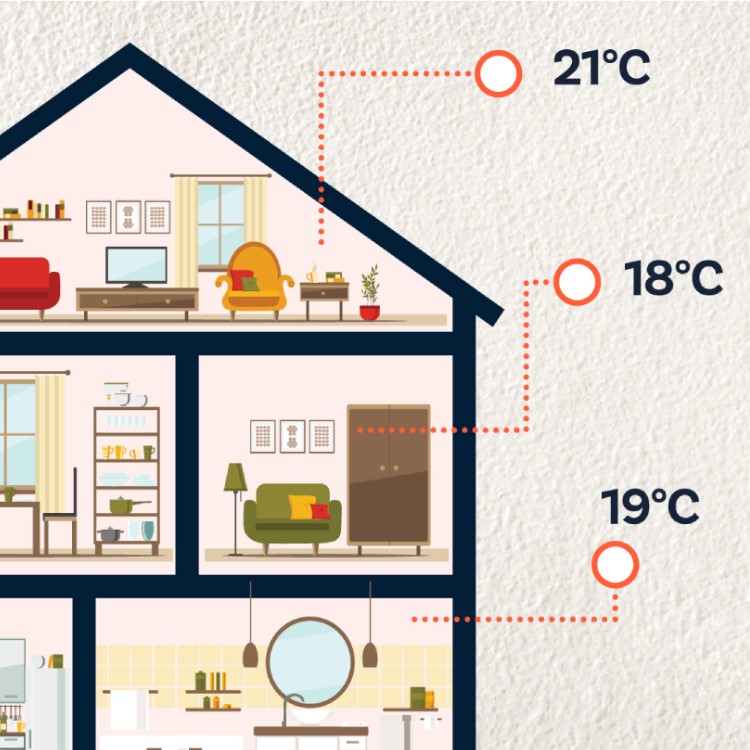
You don't need to pay to heat a spare bedroom that nobody has stepped foot in for 3 weeks. Creating distinct central heating zones lets you heat the people, not the empty space.
There's little point in heating a spare bedroom that's rarely used; it simply needs to be 16°C to ensure the room doesn't get damp. If someone's coming over to stay - simply turn it up.
You can apply this process to your whole home and personalise rooms for your family. Some family members might prefer a cooler room for sleeping, so you can set their room to be a cooler 18°C for 11pm rather than wasting energy heating the room up unnecessarily.
These are the standard numbered dials found on the side of most modern radiators. They are the simplest way to introduce basic zoned heating to your home.
Smart valves replace your standard TRV head. They connect to your Wi-Fi and allow you to set individual schedules for every single room from your phone.
These are the ultimate in zoned heating because they work completely independently from your central boiler.
Ready to create your zoned heating system? Here is a simple checklist to get you going:
It is generally more efficient to lower the temperature of a room (setback temperature) rather than letting it go completely cold. Re-heating a freezing cold room takes a lot of energy. Try setting "off" periods to 15-16°C instead.
Zoning only works if you keep the heat in the right place! If you are heating the living room but not the hallway, keep the living room door shut. Otherwise, your radiator will work overtime trying to heat the hallway too.
Most people sleep better in a cooler room (around 18°C). Multi zone heating allows you to have a cosy warm living room (21°C) in the evening while your bedroom remains cool and comfortable for sleep, saving you money every single night.