








Got a question? We're happy to help
03303903059
How to choose the right commercial fridges and freezers for your business.
Your fridges and freezers run every hour of every day, so it pays to get them right.
Commercial refrigeration is built to hold a steady temperature while doors and lids are opened again and again in a hot, busy kitchen. Most businesses need a mix of chilled and frozen storage, plus display units if they sell to customers directly.
This guide explains the main types of commercial fridges and commercial freezers, how much space you need, the features worth paying for and the temperatures to work to.
Commercial fridges fall into two groups: back-of-house storage that keeps ingredients ready for the line, and front-of-house display units that sell chilled food and drink to customers.
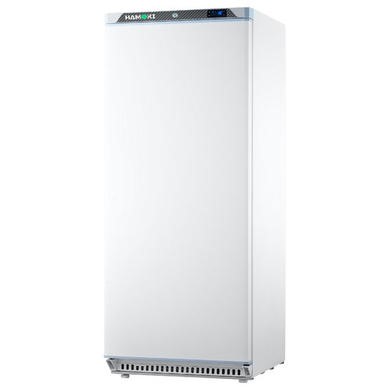
The main chilled store for most kitchens. Single and double-door models with adjustable shelves.
Shop Now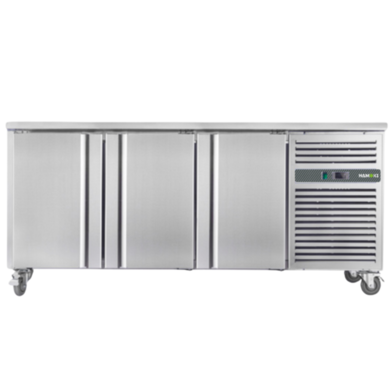
Chilled doors or drawers with a worktop on top, so you prep and store in the same spot.
Shop Now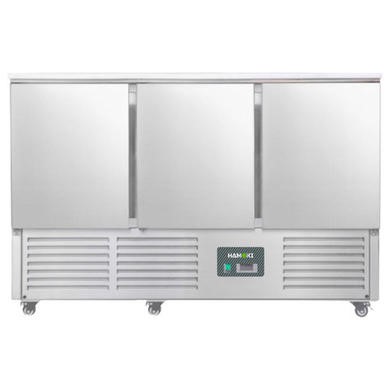
Pizza and saladette counters with chilled wells for ingredients on top.
Shop Now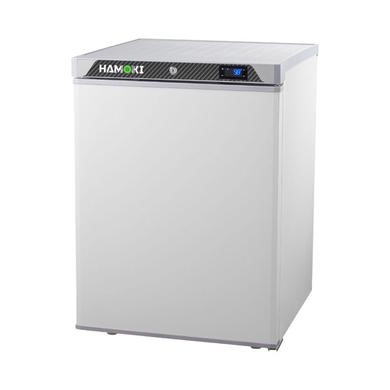
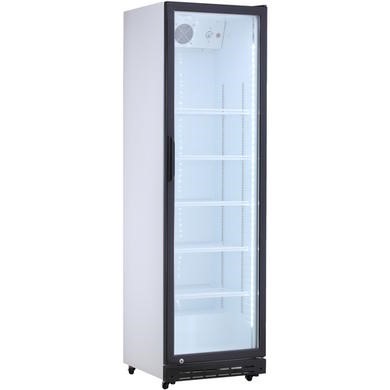
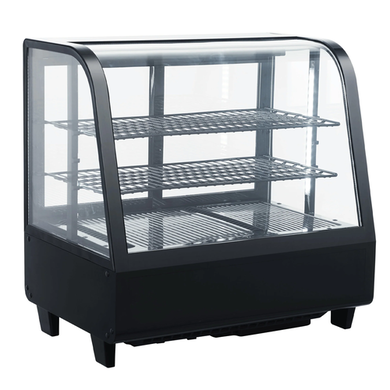
Chilled glass cabinets that put cakes and sandwiches on the counter.
Shop Now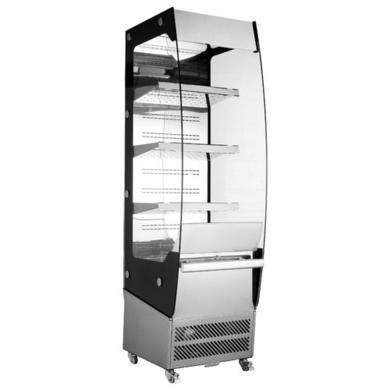
Open-fronted display shelving for fast self-service of drinks and packaged food.
Shop Now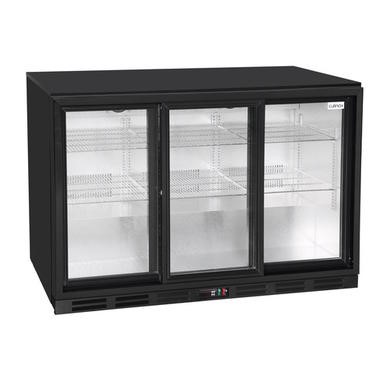
Freezers hold frozen stock at -18°C or colder. The right type depends on how often you reach in, how much you store and whether customers will see it.
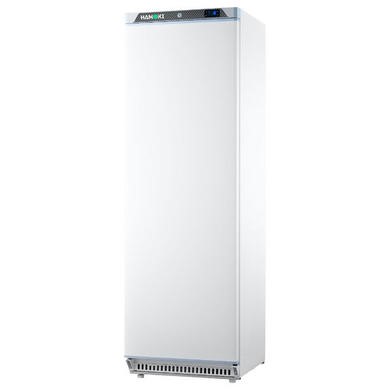
Tall frozen storage on shelves, quick to load and easy to see into. Many take GN 2/1 shelves.
Shop Now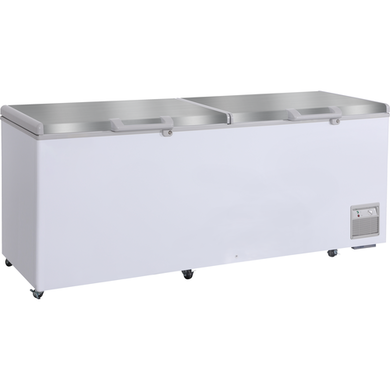
Deep frozen storage for bulk buys and back stock, with a lid that doubles as a surface.
Shop Now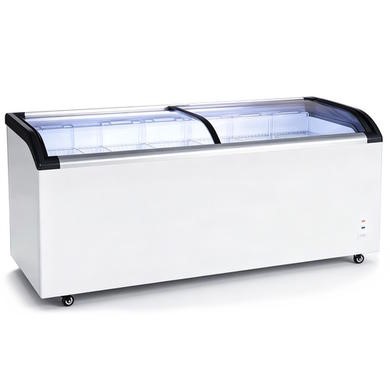
Glass-lid freezers that sell ice cream and frozen lines on the shop floor.
Shop Now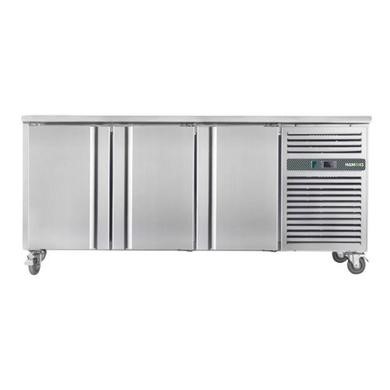
Frozen storage under a stainless steel worktop, so chips and frozen sides sit right by the fryer.
Shop Now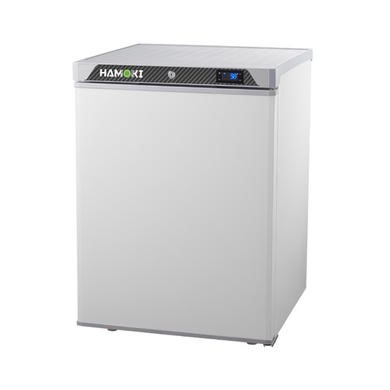
Compact freezers that fit under a standard counter for small kitchens, cafés and bars.
Shop Now| Upright freezer | Chest freezer | |
|---|---|---|
| Floor space | Small footprint, uses height instead. | Needs more floor space for the same capacity. |
| Finding stock | Shelves keep everything visible and easy to rotate. | Baskets help, but items at the bottom are harder to reach. |
| Opening often | Fan-assisted models recover quickly after the door is opened. | Cold air sinks, so less escapes when the lid is lifted. |
| Best for | Daily-use stock in a busy kitchen. | Bulk buys and back stock you visit less often. |
Deli counters with a curved glass front for butchers, delis and farm shops.
Chilled Gastronorm pans on the worktop for pizza and sandwich toppings.
Mobile chilled bars for self-service salads and cold buffets.
Work out how many days of chilled and frozen stock you hold between deliveries, then add room for the busiest weekend. Kitchens with daily deliveries need less space than those that order weekly.
Frozen stock usually turns over more slowly than chilled, so freezer space is often driven by how much you buy in bulk. If you buy frozen goods by the case to save money, a chest freezer for back stock plus an upright or counter freezer for daily use keeps both jobs simple.
If you use Gastronorm pans, count them. Many Gastronorm compatible fridges, freezers and prep counters take full-size GN 1/1 or GN 2/1 pans and shelves, so stock moves from storage to prep to oven without decanting.
| Feature | Why it matters |
|---|---|
| Digital controller and display | Lets you see and log the temperature of fridges and freezers without opening the door. |
| Fan-assisted (ventilated) cooling | Moves cold air around the cabinet so the temperature is even and recovers quickly after the door has been open. |
| Auto defrost | Stops ice building up so you do not have to empty the cabinet to defrost it. Chest freezers are often manual defrost, so look for a drain to make the job easier. |
| Climate class | Tells you the room temperature the unit is designed to work in. Choose a higher class for hot kitchens, bars and units near ovens. |
| Self-closing, lockable doors and lids | Keeps the cold in when staff are busy and protects stock overnight. |
| Baskets and adjustable shelves | Baskets keep chest freezers organised. Adjustable shelves let you fit cases, trays and GN pans in uprights. |
| Castors or adjustable feet | Makes it easy to pull the unit out for cleaning, or to level it on an uneven floor. |
| Energy class | Most commercial fridges and freezers carry an energy label. A better class costs less to run every single day, and freezers use more energy than fridges, so it matters even more. |
In England, Wales and Northern Ireland chilled food must be kept at 8°C or below by law. Most businesses set fridges to between 0°C and 5°C so there is a safety margin when doors are opened during service.
Frozen food should be kept at -18°C or colder. Let hot food cool before it goes into a fridge or freezer, and avoid loading a freezer with a large amount of unfrozen stock at once, as it slows the cabinet down.
Display fridges and freezers work harder than back-of-house units because customers open them constantly and the doors or lids are glass. Check the climate class on the specification if the unit will stand near ovens or a sunny window.
Chilled food must be kept at 8°C or below by law in England, Wales and Northern Ireland. Most kitchens set their fridges between 0°C and 5°C.
Frozen food should be kept at -18°C or colder. Many commercial freezers can run colder than this, which gives you a margin when doors and lids are opened during service.
An upright freezer takes up less floor space and keeps stock visible on shelves, which suits daily use. A chest freezer holds bulk stock and loses less cold when opened, which suits back stock you visit less often.
A counter fridge gives you chilled storage with a flat worktop. A refrigerated prep counter also has chilled wells on top for Gastronorm pans, so ingredients sit within reach while you build pizzas, salads or sandwiches.
Yes, but check the climate class. It tells you the room temperature the unit is designed to work in. Leave the ventilation gap the manufacturer asks for.
Display fridges sell food and drinks to customers on the shop floor. Back bar bottle coolers sit under the bar and are built to chill bottles and cans quickly.
Use a display chest freezer with a glass lid. Customers can see the stock without the lid being opened, and the lid helps keep the cold in.




